Improving Symbolic-Level Planning of Long-Lived Robots
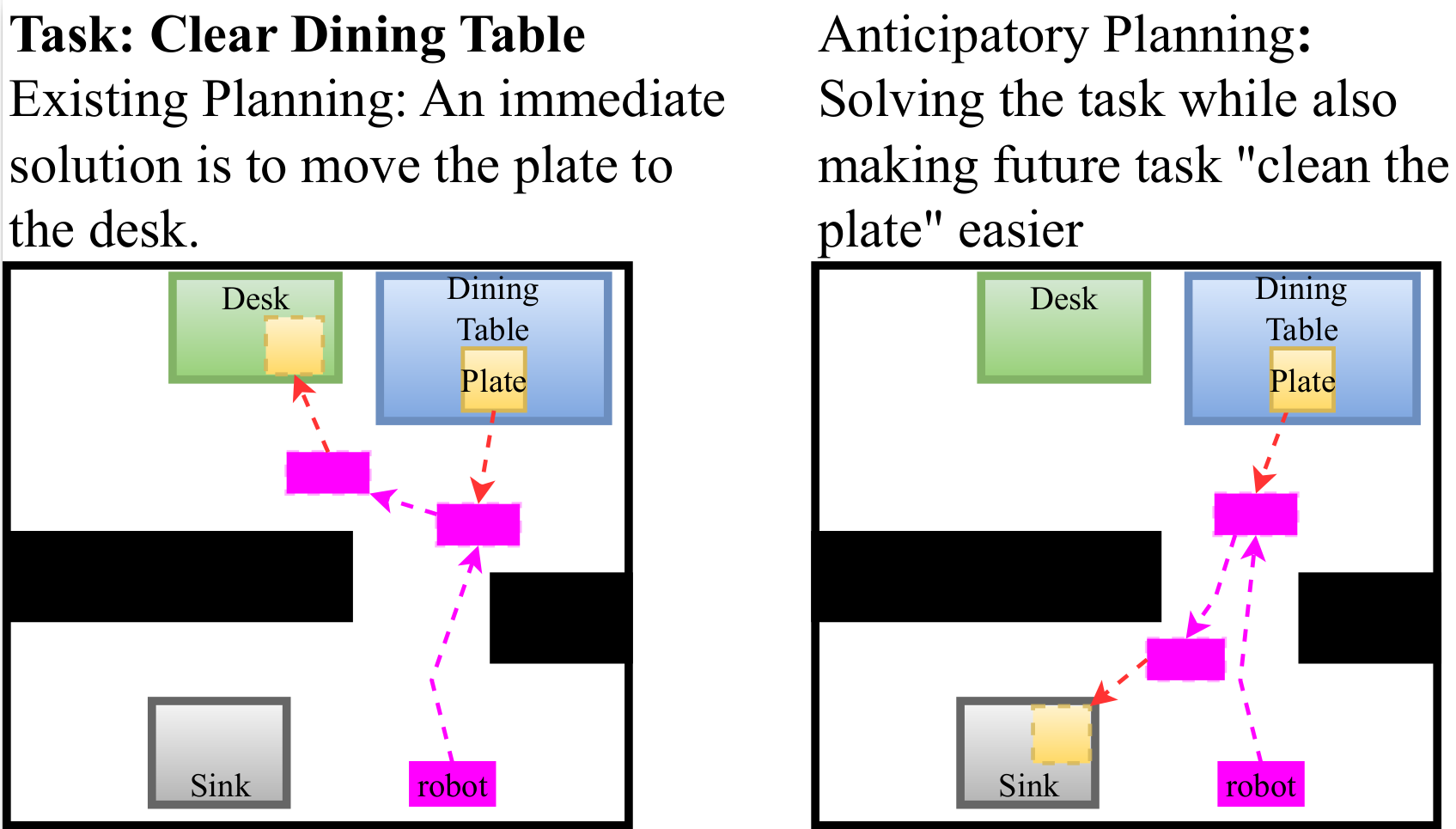
Most deployed planners are myopic: they solve each task in isolation and, lacking any model of
what will be asked next, introduce side effects on future tasks which are not yet assigned. We introduce
anticipatory planning objective that learns the impact of an action on future tasks while solving a current
one. We validate our objective in a symbolic-level task planning domain.
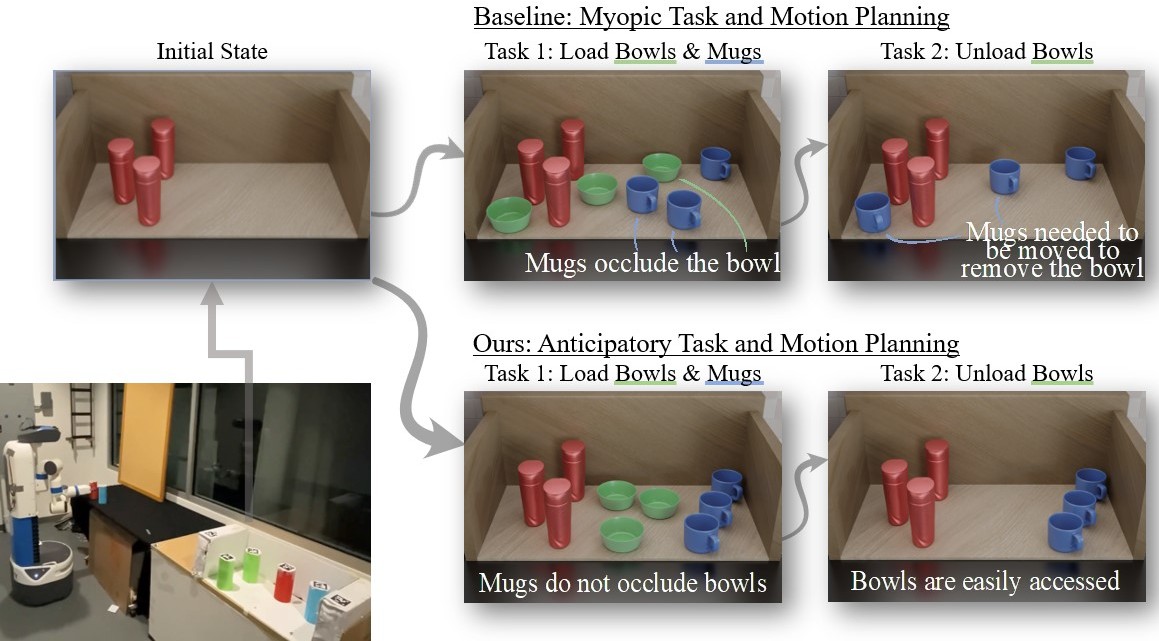
Improving Task and Motion Planning in Rearrangement in Persistent Continuous-Space Environments
Continuous parameters, such as an object's pose, determine whether an environment stays accessible or becomes cluttered and obstructed for future tasks. Anticipatory task and motion planning chooses these parameters to preserve access and reduce clutter over long-lived operation.
Making Robot Planning More Efficient with Anticipation
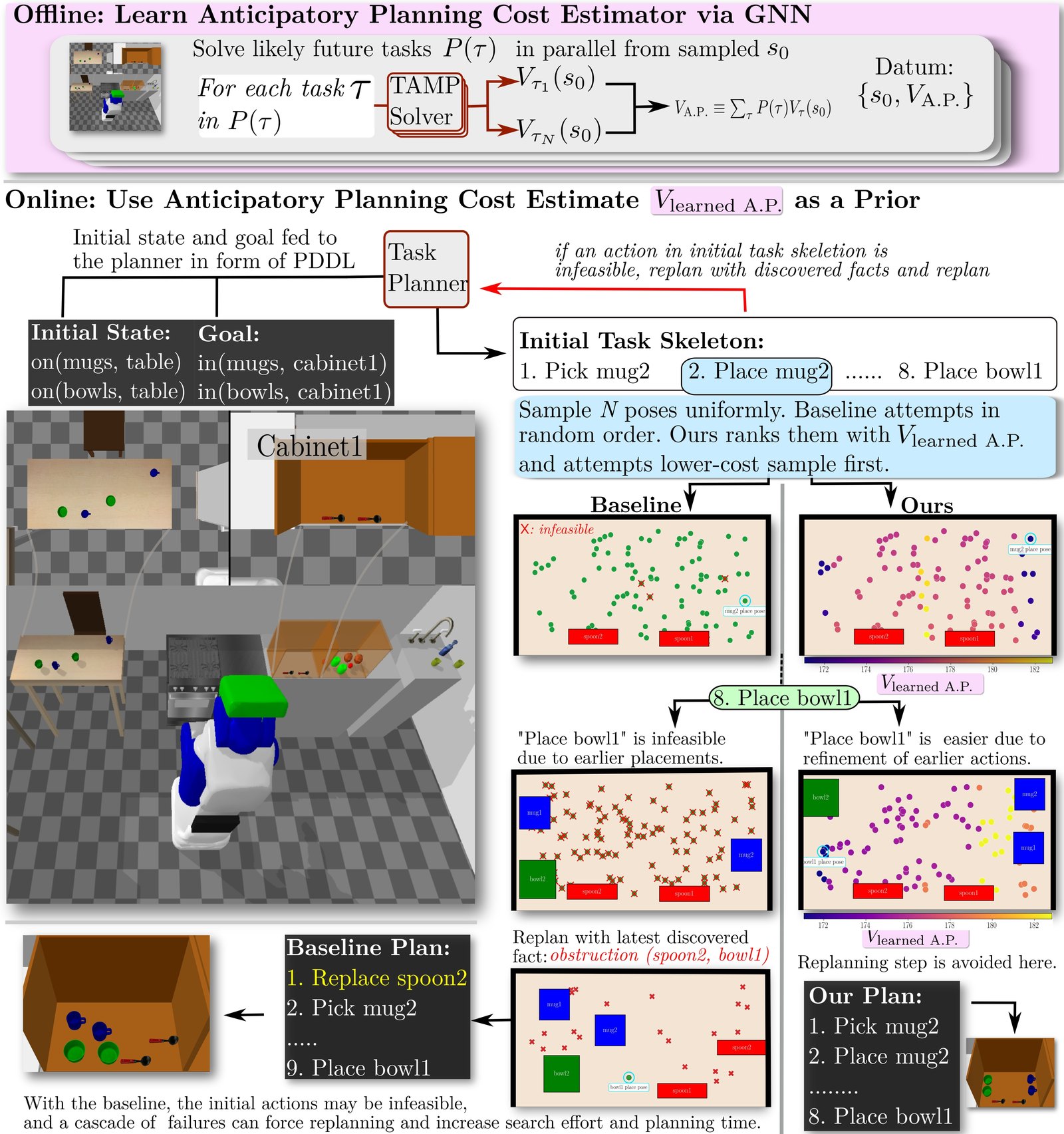
Much of the computation in task and motion planning is spent on samples that go nowhere. A
placement can be feasible for the current action yet quietly shrink the options for every later
action in the plan, triggering a cascade of failures and replanning. Using anticipatory planning
cost as a prior over which samples to try first, the planner favors choices that leave room for
the rest of the plan, reducing planning time and search effort without changing what the planner
optimizes.